


Payments built around your business

Show us how your business gets paid. We’ll show you how it should.

Kadima designs and manages payment infrastructure around how your business actually operates — from processing and risk to billing, receivables and embedded payments.

Four short steps. No credit check. A real answer, not a rate sheet.

Already know what you need? Start an application
Cards and ACH, on the major networks
Visa Mastercard American Express Discover
  • Cards
  • ACH
  • Invoices
  • Recurring
Kadima
  • Processing
  • Risk
  • Billing
  • Data

Your business

Designed by Kadima. Settled by our banking partners.
How it fits

One business.
One payment infrastructure.

Most businesses assembled payments one decision at a time: a processor here, a gateway there, billing in a third system, risk handled by whoever flagged it last. Each part works. None of them know about each other. Kadima designs the layer that connects them around the way your business actually runs.

TodayWith Kadima
One architecture. One team. One place to ask why a payment did what it did.
Your business model

How does money move
through your business?

Different businesses collect revenue in fundamentally different shapes. Your payment infrastructure should be built around yours, not the other way around.

SHAPE 01

Invoice & project businesses

Contractors, agencies and professional services, where revenue starts with an estimate long before anyone pays.

  1. Estimate
  2. Review
  3. Sign
  4. Payment method
  5. Invoice
  6. Schedule
  7. Paid

What we design around

  • Estimates with dual pricing
  • Online acceptance
  • Electronic signature
  • Payment method at signing
  • Charge on acceptance
  • Estimate to invoice
  • Split payments on a schedule
  • ACH and cards
  • Recurring billing
  • QuickBooks Online sync

SHAPE 02

Recurring & subscription

SaaS, memberships and service plans, where the second payment matters more than the first.

  1. Customer
  2. Subscription
  3. Stored credential
  4. Recurring charge
  5. Reconciliation

What we design around

  • Card on file
  • Recurring billing
  • Account updater
  • Retries for failed charges
  • ACH
  • Gateway selection
  • Reporting
SHAPE 03

Platforms & software

Software companies whose customers need to get paid, where payments can become part of the product and a line of revenue.

  1. Platform
  2. Merchant onboarding
  3. Payments
  4. Settlement
  5. Revenue share

What we design around

  • Embedded onboarding
  • Merchant accounts for your users
  • APIs and signed webhooks
  • Hosted Fields
  • Payment links
  • Revenue-share programs, where they fit
SHAPE 04

Multi-location businesses

Restaurant groups, clinics, retailers and franchises, where a new location shouldn’t mean another payments project.

  1. Locations
  2. Merchant account structure
  3. Payment strategy
  4. Reporting
  5. Settlement

What we design around

  • Merchant accounts structured by location
  • Central reporting
  • Underwriting that scales with new sites
  • Hardware and POS
  • Gateway selection
SHAPE 05

Complex & regulated businesses

Business models where the underwriting conversation has to come before the pricing conversation.

  1. Business model
  2. Risk assessment
  3. Underwriting
  4. Processing architecture
  5. Monitoring

What we design around

  • Underwriting matched to your model
  • Risk strategy
  • Fraud controls and 3-D Secure
  • Gateway selection
  • Ongoing monitoring
  • Chargeback support

These aren’t industries. They’re the shapes money takes on its way into a business: a med spa and a law firm can share one, and so can a restaurant group and a dental group.

Before and after

See what better payment
infrastructure looks like.

Three common shapes, and how the architecture changes underneath them.

Contractor or project business

Where getting paid starts before the payment does.

Before

  1. Estimate in one system
  2. Customer approves by email
  3. Separate contract and signature
  4. Invoice re-created by hand
  5. Chasing the customer who already said yes
  6. Checks and cards, collected late
  7. Reconciled by hand

With Kadima

  1. Estimate, with card and cash prices shown
  2. Customer reviews online
  3. Customer signs the agreement
  4. Payment method collected at signing
  5. Acceptance issues the invoice
  6. Payment schedule applied
  7. ACH or card
  8. QuickBooks Online sync

Software platform

Where payments stop being a cost line.

Before

  1. Your platform
  2. A separate payment provider
  3. Merchants onboarded by hand
  4. No payment revenue

With Kadima

  1. Your platform
  2. Embedded onboarding
  3. Merchant accounts for your users
  4. Payments
  5. Settlement
  6. Revenue share, where it fits

Multi-location business

Where the fifth location stops being a project.

Before

  1. Locations
  2. Processing set up one location at a time
  3. A separate report for each
  4. Every new site is a project

With Kadima

  1. Locations
  2. Structured merchant accounts
  3. One payment strategy
  4. Central reporting
  5. Room to add locations

Illustrative architectures, not customer case studies.

Why Kadima

Built for businesses that can’t afford payment surprises.

When risk is only assessed after the fact, growth itself can start to look like risk.

Many processors only take a close look at your business after something goes wrong. We would rather understand the risk in your business model before you process a dollar, so the structure you sign is built for the volume you are actually going to do.

Risk reviewed upfront · Terms explained before you sign

No processor can promise you’ll never see a hold or a reserve, and anyone who does is selling you something. What we can do is define the risk before it becomes a problem, and walk you through the structure, including any reserve terms, before you sign.

Your own merchant account

A dedicated merchant account underwritten for your business, not a pooled aggregator account shared with thousands of others.

Risk defined upfront

We look at the model, the volume and the seasonality before boarding, and structure the account around what we find.

Expected volume, understood

Growth you told us to expect shouldn’t read as a red flag when it arrives.

Pricing you can read

Tailored to volume, ticket size and risk profile. Every fee and term, including term length and early termination, explained before you sign.

Planning, with you

Tell us before big changes, such as a launch, a seasonal spike or a large contract, and we’ll help make sure the bank expects that growth rather than flags it.

Disputes and reporting, supported

When a chargeback arrives, our team helps you respond, and reporting is designed to line up with your books.

Stripe, Square and what comes next

When you outgrow
the simple setup.

Stripe and Square are good products. For a straightforward business taking straightforward payments, they’re often the right answer, and if that’s still you, we’ll say so. The calculation changes as volume, billing complexity, risk exposure or operational requirements grow.

Aggregators compared with a dedicated merchant account
QuestionAggregators like Stripe and SquareA dedicated setup with Kadima
Getting startedMinutes. Sign up and start taking payments.Days. Your business is underwritten before you process.
Your accountShared, pooled infrastructure.Your own dedicated merchant account.
How risk is assessedContinuously, and sometimes only after growth arrives.Upfront: model, volume and seasonality, before boarding.
PricingSimple flat rates.Tailored to volume, ticket size and risk profile.
Often the right fit forSimple businesses with simple payments.Growing volume, complex billing, platforms and regulated models.

Aggregators pool many merchants on shared accounts and assess risk as it surfaces. That model is efficient, and it’s why onboarding takes minutes. It’s also why a business whose volume, ticket size or model changes can find the terms changing with it. A dedicated account is more work to set up and more predictable to operate. Kadima serves that transition.

Payment architecture review

Show us how
you get paid.

A few questions about how money moves through your business. We’ll map what you have, show you where the architecture could work better, and tell you plainly if it already works.

  1. You tell us how you get paid. Four short steps, mostly taps.
  2. A payments strategist maps your setup: where money moves, where it waits, and where it gets stuck.
  3. You get a recommendation. Sometimes that’s a new architecture. Sometimes it’s “keep what you have.”
No credit check. No obligation. If your current setup is right for you, we’ll tell you that too.
Integrations

Works with the systems
you already run.

Gateways, carts, accounting and CRM. We design payments around your stack instead of asking you to rebuild it.

NMI
Authorize.net
Fiserv
CardConnect
Cybersource
Accept.blue
TSYS
Clover
SumUp

Most connections run through a compatible gateway or platform. Logos belong to their owners.

Kadima × Whop

Two commerce routes.
One conversation.

Whether your business needs Whop’s digital-commerce ecosystem or a dedicated merchant account, you shouldn’t have to work out which one fits on your own. Kadima evaluates how you sell, helps identify the appropriate route and guides the next steps — so you start with one team instead of navigating providers alone.

Kadima Payments Whop
Trust & Security

Security, stated plainly.

How your payment data is handled and who moves the money, without the fear pitch.

Card data off your servers

Hosted Fields and hosted checkout tokenize card data in the browser, so raw card numbers stay off your servers, which keeps your PCI scope small.

Stored credentials, tokenized

Card-on-file and recurring billing run on vaulted tokens, and account updater, where enabled, can refresh reissued cards automatically.

Who moves the money

Kadima designs and manages your payments. Your merchant account is issued, and your funds are settled, by our registered processing partner and its sponsor banks. Kadima is not a bank.

Visa Mastercard American Express Discover
Plain English

What Kadima does, and
who it’s for.

What Kadima Payments does

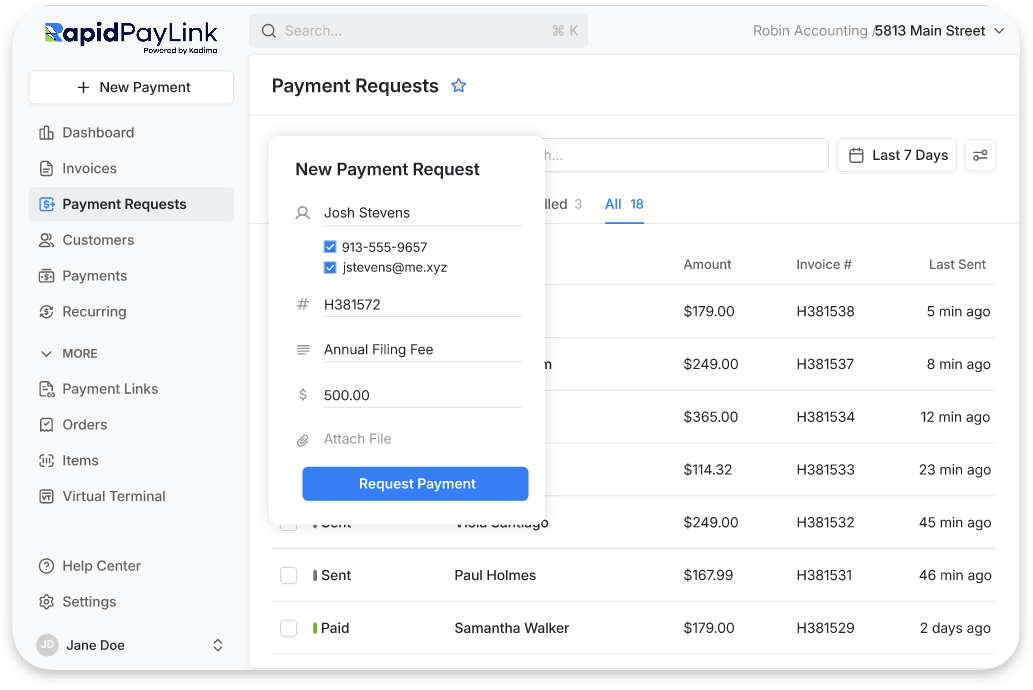
Kadima designs and manages payment infrastructure around how a business gets paid: dedicated merchant accounts with card and ACH processing, dual pricing, estimate-to-payment workflows through RapidPayLink, gateway selection, chargeback support, and developer APIs — underwritten upfront and connected as one payment architecture.

Who Kadima is for

Businesses whose payments have outgrown basic processing: contractors and project businesses, SaaS with recurring billing, platforms and marketplaces, e-commerce brands scaling volume, hospitality, and regulated or specialty businesses where underwriting has to come first.

How the model differs

Aggregators pool many merchants on shared accounts and often review risk as it surfaces, which is one reason growth can trigger holds. Kadima boards you on your own merchant account with risk reviewed upfront, so the structure is built for the volume you expect. Why processors shut businesses down →

Questions

Asked often.

How is Kadima different from Stripe or Square?

Stripe and Square are aggregators: you share a pooled account, and their risk models can react to your growth after the fact. That model is quick to start with and is often right for a simple business. Kadima boards you on your own dedicated merchant account with your risk assessed upfront, so the structure you sign is built for the volume you expect. No processor can promise you will never see a hold or a reserve; what we do is define the risk before it becomes a problem.

How long does approval take?

Pre-qualification takes about 60 seconds. After a complete application, many businesses hear back within a few business days. Timing depends on your business type, volume and documents, and our banking partners make the final decision.

Does Kadima work with businesses other processors decline?

Yes. Regulated and specialty businesses are a core focus. We match you to banking partners whose policies fit your model instead of turning you away on category alone. Some categories are outside what any partner accepts, and approval is always the bank’s decision.

Do you support ACH and recurring billing?

Yes. ACH and bank payments, recurring and stored-credential billing, and payment links are available with your merchant account. Estimates, invoicing, payment schedules and QuickBooks Online payment sync are available through RapidPayLink, Kadima’s invoicing product, on its own plan.

What does it cost?

Pricing is tailored to your volume, ticket size and risk profile, including dual-pricing programs where they fit. Every fee and term, including the term length and any early-termination fee, is explained before you sign.

Can my platform or software integrate directly?

Yes — selective API access covers embedded onboarding, payments, payment links, reporting, and signed webhooks, plus a native Medusa.js plugin. Start at Developers.

Partners & agents

Grow a book built to last.

Bring merchants to infrastructure that keeps them: straight answers on underwriting, real support, and payouts you can build a business on. Kadima is founder-led and building beyond processing.

Become a partner
Developers

Payments your product can ship.

Embedded onboarding, payment links, recurring billing, signed webhooks, and a native Medusa.js plugin — on the merchant's own account, not an aggregator wrapper.

Explore developer tools
Get started

Your payments should scale.
Not break.

Start with how your business gets paid, or go straight to an application if you already know what you need.

Show us how you get paid Start an application Call (888) 292-8555 Pre-qualification takes about 60 seconds, with no credit check at that stage.